
As powerlifters, lifting more is the name of the game, and we will do whatever it takes to add poundage to our squat, bench and deadlift. That includes reading this article. So let’s get right to it.
One of the most overlooked reasons lifters struggle with squats, deadlifts, and lower-body strength is foot position that doesn’t match their hip anatomy. You can have perfect mobility, strong legs, and great intent—but if your stance fights your hip structure, you’ll always feel unstable, weak, or beat up.
Hip structure isn’t something you can stretch or “fix.” It’s dictated by bone anatomy, specifically how the femur sits in the hip socket. Understanding this and choosing a foot position that matches, it is one of the fastest ways to get stronger, safer, and more comfortable under the bar.
This article will cover:
- The three main hip structures
- How each one affects stance and foot angle
- How to self-test your hip type
- Why matching foot position to your hips matters for performance and longevity
The Three Main Hip Structures
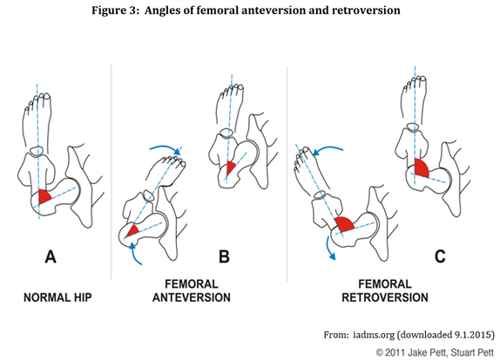
While no two people are exactly the same, most lifters fall into one of three categories:
- Neutral (Normal) hips
- Hip Anteversion
- Hip Retroversion
These terms describe the angle of the femoral neck relative to the hip socket, which directly influences how much internal or external rotation you naturally have.
1. Neutral (Normal) Hip Structure
What It Is
Neutral hips mean the femur sits in the socket at a fairly standard angle. You’ll typically have balanced internal and external rotation.
How It Looks in Training
- Comfortable squatting with moderate stance width
- Toes slightly turned out (5–15°)
- Knees track naturally over toes
- Few issues hitting depth without excessive compensation
Common Foot Position
- Shoulder-width or slightly wider
- Mild toe-out
Lifters with neutral hips tend to do well with most “textbook” squat cues because their anatomy matches what’s commonly taught.
2. Hip Anteversion
What It Is
Hip anteversion means the femur is angled forward in the socket. This creates more internal rotation and less external rotation.
How It Shows Up
- Feet want to stay more forward
- Excessive toe-out feels unstable or pinchy
- Knees cave in when forced wide
- Deep squats feel better with a narrower stance
Many anteverted lifters are mistakenly told they have “weak hips” or “bad mobility” when the real issue is stance.
Common Foot Position
- Narrow to moderate stance
- Toes mostly forward or slightly out
- Knees track more forward over toes
Trying to force a wide, toes-out power stance usually makes these lifters weaker, more uncomfortable and can cause damage to the joint.
3. Hip Retroversion
What It Is
Hip retroversion means the femur is angled backward in the socket. This creates more external rotation and less internal rotation.
How It Shows Up
- Natural duck-footed stance
- Squats feel better wide
- Pinching in the front of the hip with narrow stances
- Difficulty reaching depth unless stance is widened
Retroverted lifters are often the ones who feel instantly better when allowed to squat wide.
Common Foot Position
- Wider stance
- Moderate to aggressive toe-out
- Knees pushed out hard
For these lifters, narrow stances are not “more athletic”—they’re restrictive and painful.
How to Self-Test Your Hip Structure
You don’t need imaging or a doctor to get a useful idea of your hip structure. These tests aren’t perfect, but they’re practical and effective.
Test 1: Seated Hip Rotation Test
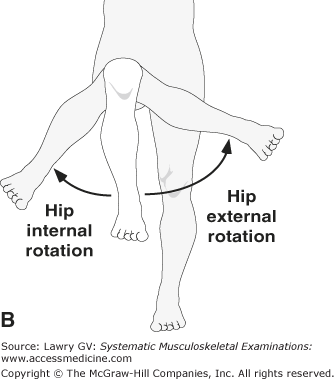
- Sit on the edge of a bench or chair
- Let your legs hang freely
- Rotate one leg inward (internal rotation)
- Rotate it outward (external rotation)
What to Look For:
- More internal than external rotation → likely anteversion
- More external than internal rotation → likely retroversion
- Roughly equal → likely neutral
Test 2: Bodyweight Squat Exploration
- Squat with a narrow stance, toes mostly forward
- Squat with a moderate stance, slight toe-out
- Squat with a wide stance, aggressive toe-out
Pay attention to:
- Depth
- Balance
- Hip discomfort
- Knee tracking
The stance that feels smooth, powerful, and unrestricted is usually closest to your true structure. This test does not rule out mobility issues but after the seated hip rotation test, you will have a better understanding of what direction to go.
Test 3: Quadruped Rock-Back Test
- Get on all fours
- Keep spine neutral
- Slowly rock hips back toward heels
- Try different knee widths and toe angles
Where motion feels clean and deep without pinching is a big clue.
After all 3 tests you should have a much better understanding of what category you are in and where to start.
Why Foot Position Matters So Much
1. Strength Output
When your foot position matches your hip anatomy:
- Force transfers efficiently
- You can push evenly through the whole foot
- You’ll feel stronger immediately, even with lighter loads
Bad stance choices leak power before the bar ever moves.
2. Joint Safety
Incorrect foot placement often causes:
- Knee cave or knee twist
- Hip impingement
- Excessive lumbar compensation
Matching stance to structure reduces unnecessary joint stress and keeps the movement where it belongs allowing maximal transfer of power, making you stronger, instantly.
3. Consistency and Confidence
When every rep feels the same:
- Technique becomes repeatable
- Bracing improves
- Confidence under heavy loads goes up
Lifters who constantly adjust their feet rep to rep usually haven’t found their true stance yet leaving potentially hundreds of pound off their total. The quicker you learn where you need to stand, the stronger and safer you will be.
Key Takeaways
- There is no universal “best” foot position. Coaches and physical therapist that give blanket statements are being irresponsible. Listen to the feedback your body gives you.
- Hip structure dictates stance more than mobility. Mobility can be worked on, hip structure can’t
- Anteversion favors narrower, straighter feet
- Retroversion favors wider, more toed-out stances
- Neutral hips fall somewhere in between
The strongest lifters aren’t copying someone else’s stance—they’re using the one their anatomy allows them to express the most force with.
If a stance feels powerful, comfortable, and repeatable, it’s probably right—regardless of where your toes point.
Final Thought:
Technique problems blamed on weakness or mobility are actually structure problems in disguise. Once you respect the unique anatomy of the individual and choose foot position accordingly, strength usually follows fast.
If your squat has never felt consistent, this is probably why.
Most lifters don’t need more cues—they need a stance that actually matches their anatomy.
If you want your technique dialed in to your hip structure, not someone else’s, apply for coaching or book a form review and let’s build a stance that makes you stronger, safer, and confident under heavy weight.
And don’t forget to sign up to our news letter so you don’t miss out on any of the new articles. Sign up here

0 Comments